
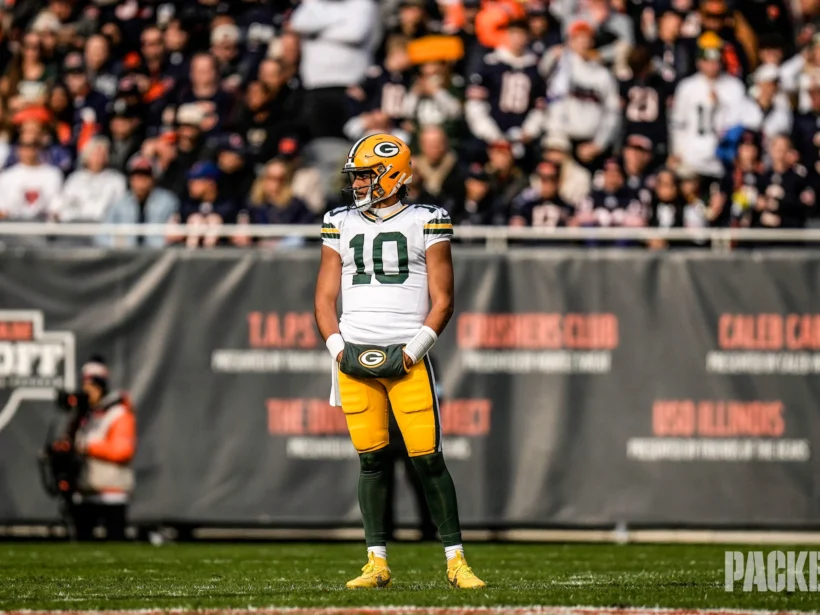
These days, NFL locker rooms are less rooms full of trash-talk and cracking helmets and more rooms full of players staring into the abyss of their cell phones. By the time they hit Lambeau Field, players are hit with thousands of notifications, opinions, and critiques from strangers.
The recent boom in the sports betting industry created microanalysis for every drop thrown short and every linebacker that doesn’t wrap up. Pressure mounts on young athletes to be perfect on every single down.
Not having that added distraction from social media is a tremendous mental advantage that past Packers greats didn’t have to worry about. The Green Bay Packers’ success depends on their ability to minimize phone distractions.
The Always-On Athlete
Digital noise prevents the body from achieving recovery while simultaneously disrupting the ability to maintain focus. The blue light emitted by screens suppresses melatonin production, preventing professional athletes from achieving deep sleep, which is essential for physical recovery.
The dopamine loops generated by short-form video applications keep the brain at maximum capacity. The nervous system remains active and cannot transition to the parasympathetic mode required for adequate recovery and muscle development.
Social media engagement increases cortisol levels due to negative comments, and it also affects sleep patterns. The fight-or-flight reaction triggered by panic responses makes athletes play in a slowed manner while experiencing heightened anxiety on the field. For athletes needing to quickly identify coverage during game action, brain fog becomes a costly mistake, preventing touchdown opportunities.
The Weight of the Wager
Gambling money from the viewing public has exponentially increased pressure on athletes. Americans bet approximately $30 billion on NFL games during the 2025 season, per the American Gaming Association. That’s why fans have dollar signs riding on every single play. Now players are dissected over “prop bets.” Simply put, fans scrutinize players for not reaching individual statistical milestones rather than for winning or losing.
Expectations turn into dollars, making each play a hyper-individualized form of harassment. A dropped pass leaves millions of fans disappointed because of their financial investment. The player robbed many fans of a potential payout. Athletes feel a crushing emotional burden when their phone vibrates in their pocket during their walk back from the field.
Youth Versus Experience
Green Bay enters this season having earned the reputation of having the youngest roster in the NFL for the third straight season. Green Bay has almost no players who weren’t born into a world where shaping identity online was expected. They’re coming in at just over 25.2 years old on average.
For these players, decoupling their sense of self from their smartphone isn’t intuitive. No position feels this pressure more than young receivers and defensive backs. One play and all hell can break loose online within minutes. Seeing that instantaneous disdain repeated over and over can take its toll.
Old-school veterans may be wired to forget their phones in their lockers. But a 22-year-old rookie needs to know right then and there about the arsenal. He’ll be defending against or working with it next week.
Jordan Love’s Mental Fortress
Quarterbacks have to stay even-keeled. Jordan Love has embraced that saying throughout his ascent and has eliminated the noise. Ever since Love became the starter, he’s repeatedly referenced riding the “roller coaster.” Love maintained balance in his approach by avoiding both excessive elation and unnecessary despair.
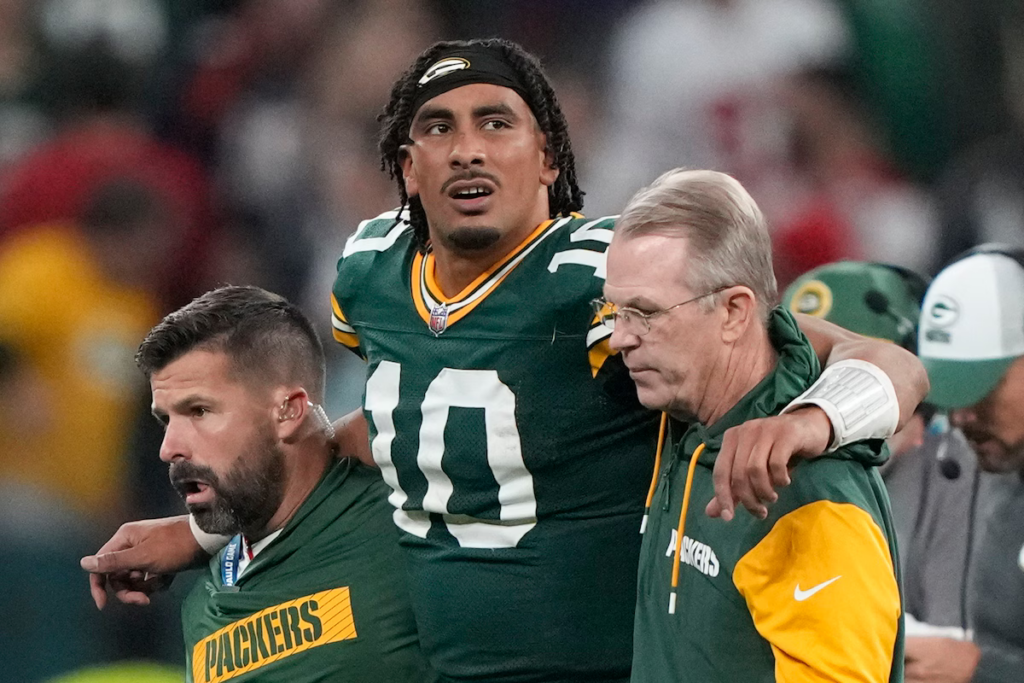
Love shields his young offense from distractions and shows them the only noise that matters. That’s just what the coaches and film room say. Staying away from the internet allows Love to keep his mind right and lead those two-minute drills.
Strategies for Sunday Silence
Athletes and coaches are making greater efforts to minimize their phone use by implementing “zero-phone” rules. Players have begun turning in their phones days before the game to let dopamine calm down. They won’t think about anything other than the game of football. Additionally, people are using mindfulness techniques and sports psychologists to visualize the positive side of things. They aren’t looking at X (Twitter), thinking of ways to lose.
Teams are also trying to connect with teammates instead of using their phones. When teammates create authentic chemistry in the locker room by removing headphones during interactions, they become a reliable support system.
From Notifications to Championships
Physical ability isn’t what separates teams in this league. It’s hard to find anyone who lacks the tools. Mental toughness to mute the noise is what will set teams apart. How will Green Bay’s youth step up when it comes to pressing pause on their scrolling eyes? When everyone has a voice, only the teams that silence themselves will be heard.
