
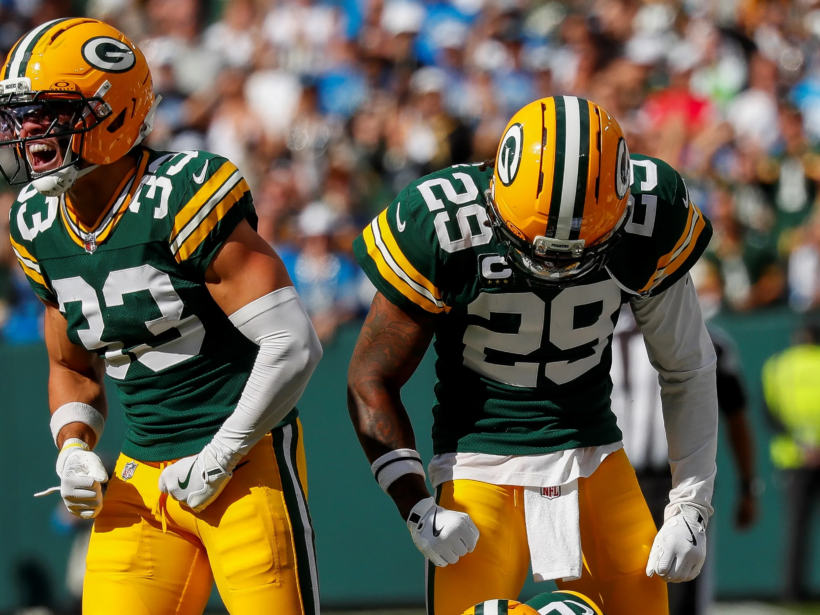
Green Bay enters 2026 with a defense that looks different in both personnel and structure. New coordinator Jonathan Gannon has inherited established playmakers while adding veterans and young talent capable of reshaping the unit’s operation.
The potential is obvious, but turning change into consistent production requires more than individual talent. Pressure, takeaways, tactical flexibility and situational execution must connect. If those elements develop together, the Packers could build a defense capable of influencing games throughout a demanding NFC schedule this season.
New Front Seven Sets Aggressive Tone
Green Bay’s defensive transformation begins up front. Veteran tackle Javon Hargrave adds proven interior disruption, while the return of Devonte Wyatt should provide another established presence inside Gannon’s new 3-4 base front.
Micah Parsons remains the defining edge threat, although his recovery creates early uncertainty. Until he returns, Lukas Van Ness, Barryn Sorrell and others must generate enough pressure to prevent opposing quarterbacks from consistently operating from comfortable pockets.
That development could influence how analysts approach NFL point spread odds involving Green Bay. A front capable of disrupting timing can change drives through sacks, hurried throws and negative plays without requiring constant pressure packages.
Zaire Franklin adds experience behind that line after arriving from Indianapolis. His communication responsibilities should be particularly important while the Packers adjust to Gannon’s system. If Green Bay combines interior strength, a productive edge rotation and disciplined linebacker play, its front seven can establish the physical identity needed to support everything behind it.
Secondary Revamp Targets Ball Production
Pressure becomes considerably more damaging when the secondary converts hurried decisions into turnovers. Green Bay already possesses an established playmaker in Xavier McKinney, whose range gives Gannon considerable flexibility when designing coverages.
The Packers have also introduced new competition at cornerback. Veteran Benjamin St-Juste arrived during the offseason, while second-round rookie Brandon Cisse has already received first-team opportunities during training camp.
Cisse’s development matters because Green Bay needs reliable coverage alongside its established defensive backs. Stronger cornerback play can give the pass rush additional time, while pressure up front can force quarterbacks into the contested throws defensive backs want.
The safeties provide another important layer. McKinney, Evan Williams and Javon Bullard give Gannon several interchangeable options capable of appearing in different areas before the snap. That versatility could help disguise intentions while keeping quarterbacks uncertain about where coverage rotates. Creating more takeaways ultimately depends on marrying that deception with consistent pressure.
Scheme Flexibility Creates Matchup Advantages
Gannon’s arrival brings a significant structural change. Green Bay is moving back toward a 3-4 base defense, but modern NFL offenses require considerably more flexibility than one personnel grouping can provide.
That adaptability should become particularly visible in the secondary. Gannon has experimented with using McKinney, Williams and Bullard together, giving the Packers opportunities to create nickel looks without sacrificing the versatility of their safety group.
The defensive front can move as well. Young edge defender Dani Dennis-Sutton has taken pass-rushing snaps from interior alignments during obvious passing situations, illustrating Gannon’s interest in finding favorable individual matchups.
Fall analysis increasingly depends on combining current form with weather conditions and course suitability rather than assuming seasonal statistics apply equally across different events. Changing fronts, disguising responsibilities and moving rushers can prevent opponents from settling into comfortable patterns. The challenge is executing those adjustments without creating confusion among Green Bay’s own defenders.
Coaching Continuity Supports Player Development
Although Gannon is new, development still depends heavily on relationships formed throughout the defensive staff. Position coaches remain responsible for translating broader concepts into techniques players can execute instinctively during games.
That process is already visible with Chris McClellan. Defensive line coach Vince Oghobaase has used Hargrave’s previous film to teach the rookie how to operate in the new front, creating a direct link between veteran experience and young player development.
NFL narratives point out that existing teammates can provide similar support. Sorrell and Collin Oliver trained alongside Parsons during the offseason, gaining valuable exposure to the preparation habits of one of the NFL’s established pass rushers.
Communication becomes particularly important during schematic change. Players must understand not only their assignments but also how those responsibilities connect with their teammates. Gannon’s system can provide flexibility, but its effectiveness depends on defenders reacting together. Continued work between coaches, veterans and younger players should determine how quickly that understanding becomes automatic once regular-season pressure arrives.
Third-Down Efficiency Defines Defensive Growth
Personnel changes attract offseason attention, but third-down performance will provide a clearer measure of whether Green Bay’s defense has genuinely improved. Ending drives consistently is where pressure, coverage and communication must operate together.
The front has a central role. Interior disruption from Hargrave or Wyatt can prevent quarterbacks from stepping comfortably into throws, while edge pressure can narrow escape routes and force quicker decisions.
Coverage must complement that rush. McKinney and Green Bay’s other defensive backs need to prevent easy completions near the first-down marker, particularly when opponents spread the field and attempt to create favorable individual matchups.
Third-down performance also provides a useful test of Gannon’s tactical flexibility. Passing situations create opportunities to move rushers, disguise coverage and alter personnel packages, but complexity only matters when it is executed effectively. If Green Bay consistently forces punts rather than allowing extended drives, the benefits can spread across the team. Fewer defensive snaps also help preserve the unit’s energy deeper into games.
Young Depth Provides Long-Term Stability
Green Bay’s defensive ceiling does not depend solely on established starters. A long NFL season inevitably demands contributions from deeper on the roster, making the development of younger defenders particularly important.
McClellan has already worked with the first-team defense during injuries along the line. Cisse has received similar opportunities at cornerback, while Sorrell, Oliver and Dennis-Sutton provide developing options around the edge.
Competition can strengthen rotations even after established starters return. Fresh defensive linemen can maintain pressure later in games, while additional defensive backs give Gannon greater freedom to adapt personnel packages to particular opponents.
That depth also matters beyond individual matchups. Parsons and other established defenders cannot reasonably be expected to play every available snap, especially over a full regular season. If Green Bay’s younger players establish dependable roles, the Packers can distribute workloads without dramatically changing their defensive identity. Development in 2026 could therefore strengthen both the current unit and the foundation available for future seasons.
Building a Defense That Travels
Green Bay has assembled several ingredients needed for meaningful defensive improvement. Hargrave and Franklin add veteran experience, while McKinney, Parsons and Wyatt provide established talent around which Gannon can shape his system.
The decisive factor will be how effectively those pieces connect. Pressure must create difficult throws, coverage must produce stops, and younger defenders must sustain performance when rotations change. If communication and third-down execution develop alongside the new scheme, the Packers can turn an offseason of defensive change into a genuine strength throughout 2026.
