

The last time the Green Bay Packers won a home game, I was there.
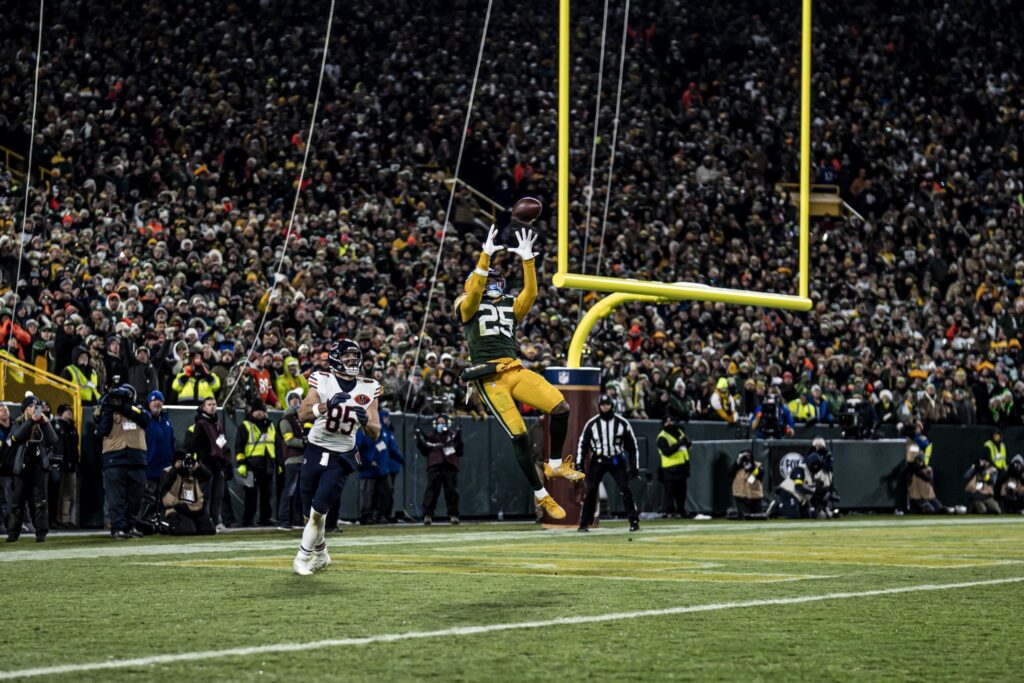
December 7, 2025. Packers against the Bears. A meaningful December game at Lambeau Field, with the division lead hanging in the balance. And when Keisean Nixon intercepted Caleb Williams in the end zone, the place erupted.
Chicago had driven deep into Green Bay territory, threatening to erase a seven-point lead. Every snap carried the possibility that the Bears would tie it. Then Williams threw on fourth down, Nixon came down with the ball, and with 22 seconds remaining, the tension became celebration. Green Bay had secured a 28-21 win and moved atop the NFC North.
That is the moment I keep coming back to. The roar when everyone realized Nixon had it. The relief of watching the defense finish the game. The excitement of beating Chicago when both teams had something to play for.
I left Lambeau fired up. The Packers were 9-3-1, and it felt like they were building toward something bigger. Little did we know how quickly everything would change.
A week later, Micah Parsons went down in Denver. Then came the losses, the collapse in Chicago, and a playoff exit that still hangs over this team. Now the Bears return to Lambeau with Green Bay sitting at 2-2, still trying to find its footing.
The Packers need this game to become a turning point. They cannot afford another afternoon that leaves everyone wondering what happened to the team we believed in last December.
Everything Changed for the Packers After Denver
Parsons’ injury was the moment the optimism took a serious hit. One week after the Bears win, he suffered a noncontact knee injury while rushing Bo Nix in Denver. His knee buckled, he went to the ground, and the injury proved to be a torn ACL.
Losing a player like Parsons changes what a defense can do. He forces offenses to account for him, creates opportunities for teammates, and can wreck a possession before it develops. His presence gave Green Bay a reason to believe its defense could make the play that mattered in January.
Suddenly, that player was gone. The Packers lost their final four regular-season games, then lost to Chicago in the playoffs. Parsons remains sidelined as he continues his recovery. His absence helps explain what happened. It does not excuse everything that followed.
Green Bay still had opportunities to beat the Bears. It still had leads it should have protected. Most painfully, it had a 21-3 halftime advantage in the playoff game and watched Chicago turn it into a 31-27 victory.
The Packers lost their best defensive player. Then they repeatedly failed to finish games they were positioned to win. Both things belong in the story.
This Game Carries More Than Rivalry Stakes
A 2-2 record leaves plenty of season ahead. But the Packers have already used the first month to raise more questions than they have answered.
Their two victories came on the road against the Jets and Buccaneers. Their only home appearance ended in a 35-14 loss to Atlanta. Last week’s 17-14 win at Tampa Bay got them back to .500, but it did not erase the slow start. Sunday gives Green Bay a chance to change the conversation.
Beat Chicago, and the Packers move to 3-2 while bringing the Bears to the same record. They get a division win, the head-to-head advantage, and something meaningful to build on. Lose, and Green Bay drops to 2-3 while Chicago improves to 4-1.
That difference matters even before considering the opponent. Then add everything else: the Bears ended your season, celebrated your collapse, and now have a chance to beat you in your own stadium with a backup quarterback.
It would not end the Packers’ season. It would make it much harder to argue that this team has moved beyond the problems that ended the last one. Green Bay needs evidence that it can handle an important game, respond to adversity, and finish against an opponent that has recently been better at all three.
Packers Need to Give the Bears a Reason to Stop Talking
Ben Johnson has made his feelings about the Packers clear. His playoff locker room speech began with “F*** the Packers.” Bears players celebrated with cheese grater hats, and Williams shredded cheese on television. That should bother Green Bay.
But the Packers helped make those celebrations possible. Chicago won the games. Green Bay surrendered the leads. The response has to come on the field.
There is no value in acting offended all week and then allowing the Bears to dictate Sunday. A personal foul does not prove toughness. Neither does talking after a tackle that comes beyond the first-down marker.
The Packers need to block better, tackle better, and execute when the game gets uncomfortable. They need to make Chicago leave Lambeau talking about what went wrong.
Stop the Run
Tyson Bagent will start for Chicago in place of the injured Williams. He completed 25 of 34 passes for 268 yards against the Jets last week, so Green Bay cannot treat his presence as an automatic advantage. The Packers have to create that advantage.
Chicago’s league-leading running game is the starting point. Kyle Monangai rushed for 146 yards and two touchdowns against New York, helping the Bears pile up 34 first downs.
If Green Bay allows steady gains on first down, Johnson can keep Bagent comfortable. Short-yardage situations open up the entire playbook, including play-action and quick throws that get the ball out before pressure arrives.
The Packers need to win early downs.
That means interior defenders holding their ground, edge players preventing easy escapes outside, and linebackers meeting runners before they build momentum. The first defender there has to finish, with help arriving quickly.
Force third-and-long, and the matchup changes. Bagent has to hold the ball longer. The pass rush can attack. Lambeau can make communication harder.
The coverage has to work with that pressure. Green Bay cannot give away easy completions underneath, but it also cannot become so eager to jump a short route that Johnson opens something behind it.
The goal should be to make Bagent repeatedly solve difficult situations. Allowing him to hand off, throw on schedule, and stay ahead of the chains would waste the opportunity his start presents.
Give Jordan Love a Game He Can Control
The offense has an equally important role. Green Bay needs sustained possessions that keep Chicago’s offense off the field and prevent its own defense from wearing down.
That starts with giving Jordan Love reliable answers. LaFleur should use motion and formations to help reveal coverage, create early completions, and give Love somewhere to go when Chicago brings pressure.
Take the completion that keeps a drive moving. Step into the pocket when protection allows it. Avoid turning an unsuccessful first-down play into a desperate attempt to recover everything at once.
The line needs to give him room to operate, and the running game needs enough productive carries to keep Chicago honest. Green Bay does not have to force runs into crowded fronts, but it cannot accept an afternoon of second-and-long and obvious passing downs.
Explosive plays still matter. They become more effective when the defense also has to account for an offense that can patiently move the chains.
The Packers need to finish those possessions, too. Against a division rival, drives that repeatedly stall near the end zone leave too many opportunities for the game to turn.
Bring the Crowd Into the Game and Keep It There
I remember what Lambeau sounded like when Nixon made that interception. That energy is available Sunday. The Packers have to give it somewhere to go.
An opening touchdown drive would help. So would a tackle for loss, a third-down sack, or a receiver fighting through contact for a first down. The crowd needs to see a team prepared to meet the moment.
Green Bay cannot spend the first quarter settling in while Chicago establishes control.
And once the stadium gets loud, the Packers have to sustain it. A defensive stop followed by a quick three-and-out sends the defense right back onto the field. A careless penalty can erase the play that had everyone standing.
The players and coaches need to give Lambeau a reason to stay involved on every Chicago possession. That is how home-field advantage becomes something an opposing backup quarterback has to deal with.
A Packers Lead Has to Become a Win
A strong start would be encouraging. Against this opponent, it would settle nothing.
The Packers already know how quickly a lead can disappear.
LaFleur has to keep calling plays that can produce first downs late. The defense has to finish possessions. Special teams have to handle the details that become decisive in a close game.
Most importantly, Green Bay has to respond when Chicago makes its push. There will be a bad series. A Bears play will quiet the crowd. The Packers cannot let that moment become the beginning of another collapse. They need to answer it.
Sunday offers Green Bay a chance to move above .500, gain ground in the division and finally give its home crowd another win. It also offers something this team badly needs: proof that last season’s ending does not have to keep repeating itself.
The last time I watched the Packers beat the Bears at Lambeau, Nixon’s interception sent the stadium into a roar and sent me home believing.
It is time this team gave its fans that feeling again.
