
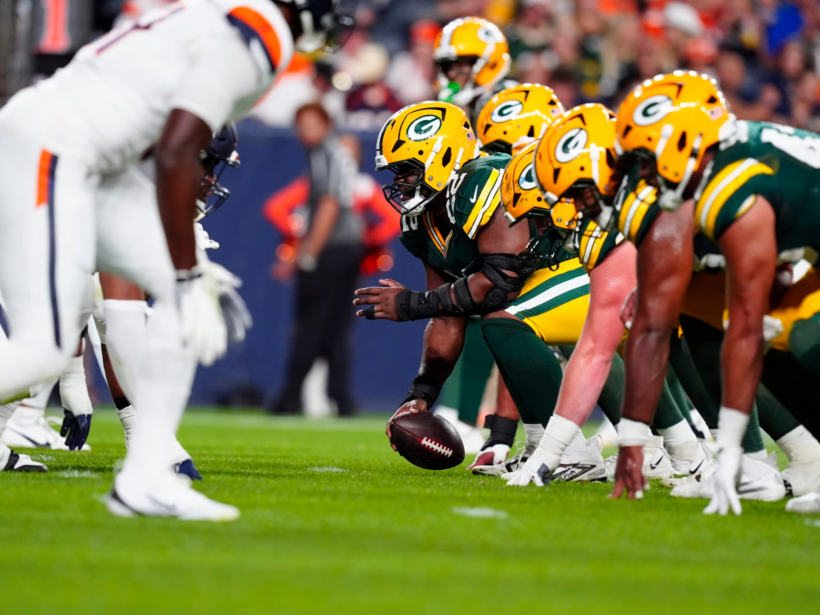
The NFC North is proving difficult for Green Bay in 2026. Minnesota has started strongly, Chicago is improving, and Detroit remains dangerous. The Packers have the talent to challenge all three, but their results have been uneven.
For Packers fans, the question is whether Green Bay can turn that talent into a division title or a serious playoff run. Comparing the four teams helps explain why their futures outlooks differ.
Green Bay Packers: What Supports Their Futures Outlook?
Jordan Love’s results illustrate Green Bay’s uneven offensive performance. Through seven games, he has thrown for 1,958 yards, 13 touchdowns, and five interceptions. Against Chicago, he completed 25 of 31 passes for 367 yards and two touchdowns. Against Detroit, he completed 27 of 45 for 274 yards, two touchdowns, and an interception.
Those figures demonstrate different levels of passing production, but they do not establish excessive dependence on deep throws. Green Bay’s next assessments should consider early-down efficiency, protection, and the down-and-distance situations it creates. Productive rushing or shorter completions may help sustain drives, depending on the opponent and execution.
The defense faces a similar test of consistency. Pressuring quarterbacks matters, but so does preventing long possessions and limiting gains after the catch. Looking at NFL stats and analysis alongside recent performances can help distinguish lasting improvement from one strong afternoon.
Green Bay’s prospects ultimately depend on combining those strengths. Better offensive balance and reliable defense would improve its chances against Detroit, Chicago, and Minnesota. Head-to-head results carry extra weight in a close division, making those meetings central to the Packers’ outlook.
Detroit Lions: Can Green Bay Match Their Offensive Firepower?
Detroit’s offense remains a major obstacle for Green Bay. Through six games, the Lions have scored 184 points, averaging 30.7 per game, while allowing 165, or 27.5 per game. That scoring profile supports the contrast between their offensive production and defensive concerns, although the recent 20-17 victory over Green Bay also shows they can win a lower-scoring contest.
The Packers must disrupt that rhythm. Pressure on Goff can force quicker throws, but aggressive rushes also risk opening space for Detroit’s playmakers. Green Bay needs to tackle well and avoid allowing short completions to become lengthy gains. Otherwise, Detroit can keep the Packers’ offense waiting on the sideline.
Detroit’s defense presents opportunities in return. If the Lions struggle to protect against the pass, Love can attack downfield. That advantage depends on Green Bay’s protection holding up long enough for receivers to develop their routes.
Detroit may have the offensive tools for a division title and a deep playoff run, but defensive reliability matters against stronger postseason opponents. For Green Bay, disrupting Detroit’s offensive rhythm could make the difference in a head-to-head contest and strengthen its position against a direct division rival.
Chicago Bears: Is Their Improvement Sustainable?
Chicago’s 5-2 record establishes it as a divisional challenger, although Green Bay’s 31-7 victory in their first meeting remains an important counterpoint. The Bears have since beaten Atlanta and New England. Those results show a recovery after the Packers loss without establishing that the same performance will continue against every opponent.
Against Green Bay, Chicago’s running game could be particularly important. Successful early-down rushing creates shorter passing situations and reduces the pressure on its quarterback. The Packers must prevent those manageable situations without leaving openings for big plays.
The Bears’ defense can also influence close contests through takeaways. However, turnovers aren’t equally dependable from week to week. Chicago’s ability to limit yardage and prevent scoring drives offers a better indication of whether its improvement can last. Those measures reveal more than a single game decided by a late interception.
Minnesota Vikings: Can Green Bay Close the Gap?
Minnesota’s pressure-heavy defense has a documented role in its strong start. An October 1 Vikings report described unusually aggressive blitzing during victories over Green Bay, Chicago, and Tampa Bay. Green Bay’s 39-22 opening defeat illustrates the challenge its protection faces in the return matchup.
If Minnesota generates pressure without sacrificing coverage, Green Bay may struggle to find its preferred deep throws. Quick completions, effective protection, and productive early-down plays could help the Packers avoid third-and-long situations. Penalties and negative plays would make that task more difficult against a defense comfortable disguising pressure.
Minnesota’s early advantage matters, but a strong start doesn’t decide the division. Its offense must continue contributing, and injuries or difficult matchups could change the race. Their remaining meeting gives Green Bay a direct opportunity to recover ground, although the division race also depends on both teams’ other results.
What Do NFL Futures Odds Reveal About the NFC North Race?
The NFC North futures market offers a different perspective from the standings. Minnesota’s strong start may support a shorter division-winner price, while Detroit’s offensive strength and Chicago’s improvement also influence expectations. Green Bay’s position depends on whether its remaining schedule and potential for improvement give it a realistic path past those rivals.
For the Packers, head-to-head results could be particularly influential. Beating Minnesota would help Green Bay close the gap, while victories against Detroit and Chicago would improve its position against direct competitors. Those results also matter for divisional tiebreakers, making them especially valuable in a close race.
These possibilities are reflected in NFL futures odds, where the prices for Green Bay and its rivals can change as the season develops. A Packers victory over Minnesota, for example, could shorten Green Bay’s division-winner odds while making Minnesota’s price less favorable. Comparing those prices helps illustrate how the market assesses each team’s chances of finishing first.
Super Bowl futures offer another perspective, although they measure a different challenge. A team could become the NFC North favorite without emerging as a leading championship contender. For Green Bay, improvements in offensive consistency, defensive performance, and results against stronger opponents would matter when assessing both possibilities.
What Will Determine Green Bay’s Place in the Race?
The Packers face distinct challenges against their rivals. Detroit tests their ability to contain an efficient offense, Chicago demands disciplined play on both sides of the ball, and Minnesota can punish mistakes through defensive pressure. Green Bay’s chances depend on responding to those problems consistently.
Better balance on offense, dependable tackling, and results in divisional games would strengthen the Packers’ position. Futures markets offer one way to follow changing expectations, but they cannot remove uncertainty. Any betting decision should reflect that uncertainty and remain within an affordable budget.
Content reflects information available as of 2026/10/28; subject to change.
