
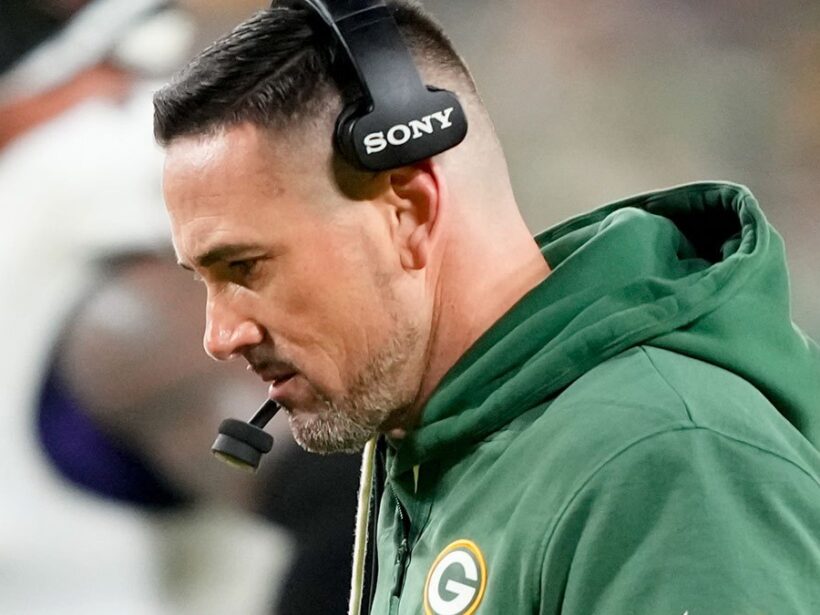
The Green Bay Packers entered the 2026 season with Super Bowl aspirations. Ten games later, following an embarrassing 30-10 loss to the division-rival Minnesota Vikings, those aspirations are beginning to look more like wishful thinking.
At 6-4, the Packers currently occupy the NFC’s seventh seed, a position that has become all too familiar for a Matt LaFleur lead team. According to the New York Times playoff simulator, Green Bay’s chances of reaching the postseason have fallen to just 42%, while their odds of winning the NFC North sit at a dismal 3%.
Unfortunately, Sunday’s loss may have all but guaranteed another season fighting for the final playoff spot. Even if the Packers manage to qualify, the most likely path to the Super Bowl would require winning three consecutive road games.
For a franchise that once made Lambeau Field one of the most feared postseason destinations in football, that’s a difficult reality to accept.
The Lambeau Field Playoff Drought
When was the last time the Green Bay Packers hosted a playoff game?
January 22, 2022.
That’s 1,760 days as of November 17, 2026.
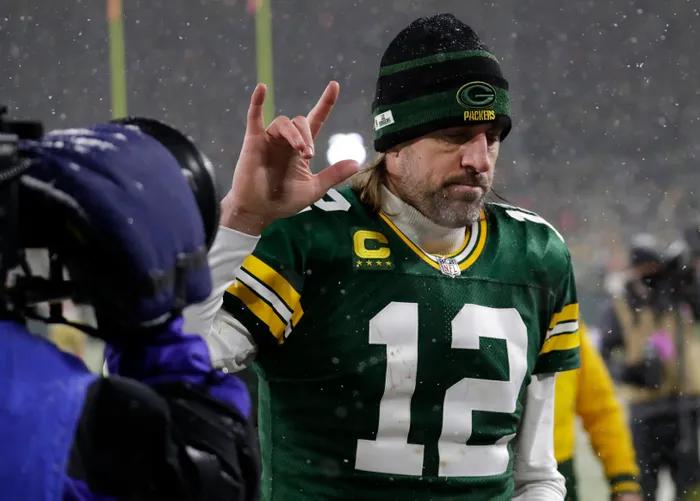
The Packers fell 13-10 to the San Francisco 49ers, ending another promising season in heartbreaking fashion and ending Aaron Rodgers tenure as QB.
Since then, Green Bay has played four postseason games, all on the road, winning just once.
To put that into perspective, consider the expectations established by previous Packers head coaches.
Mike Holmgren transformed Green Bay into a perennial contender, reaching consecutive Super Bowls and winning Super Bowl XXXI. Mike Sherman never reached those heights, but his teams regularly competed for division titles and hosted postseason football. Mike McCarthy brought another Lombardi Trophy to Green Bay and led the Packers to multiple NFC Championship Games.
LaFleur deserves credit for the success he enjoyed early in his tenure. His teams hosted four playoff games across the 2019, 2020 and 2021 seasons, including the NFC Championship Game against Tampa Bay.
But those accomplishments are becoming increasingly distant.
The Packers haven’t won the NFC North since 2021. They haven’t hosted a playoff game since January 2022. And they haven’t reached the NFC Championship Game since the 2020 season.
At some point, the question needs to shift from what this team accomplished years ago to why it continues falling short today.
“It All Starts With Me”
Following Sunday’s loss, Matt LaFleur was asked whether offensive line coach Luke Butkus was still the right man for the job.
His response was familiar.
“It all starts with me.”
It’s a phrase Packers fans have heard countless times throughout LaFleur’s tenure.
And while accountability is an admirable quality in a head coach, accountability without meaningful change eventually becomes little more than a talking point.
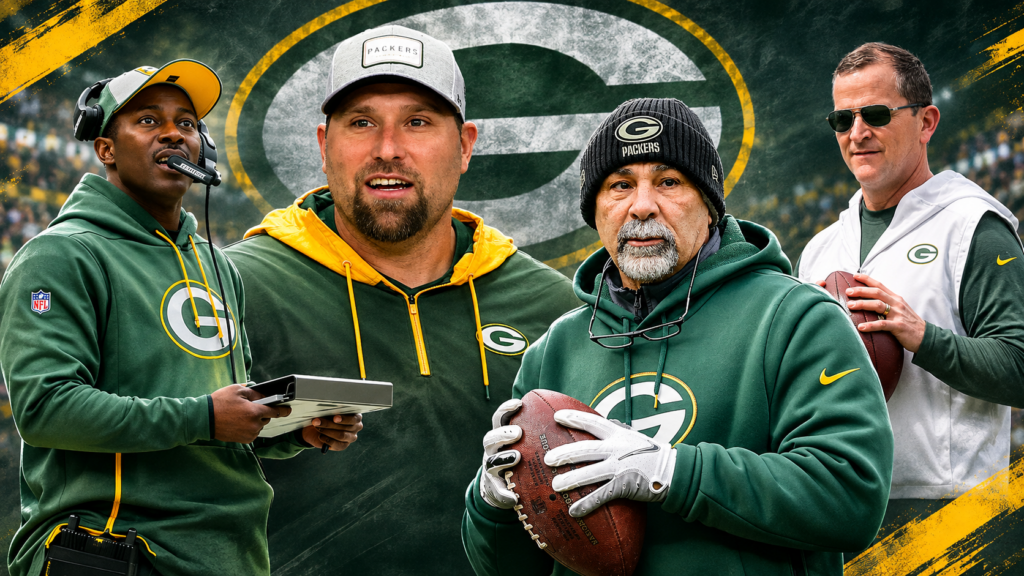
Under LaFleur, Green Bay has developed a troubling habit of allowing underperforming position groups and coaching decisions to linger until their shortcomings become impossible to ignore.
Maurice Drayton’s special teams unit struggled throughout the 2021 season before a blocked punt helped end Green Bay’s championship hopes against San Francisco.
Joe Barry’s defenses repeatedly struggled with consistency, communication and situational execution before the organization finally moved on following the 2023 season.
Jason Rebrovich’s defensive line has faced its own questions regarding development and production given the talent and resources General Manager Brian Gutekunst had invested in the unit.
And most recently, Rich Bisaccia’s special teams units continued to experience costly breakdowns despite significant investments in personnel and coaching.
The regular season breakdowns eventually showed up in the playoffs and lead to the demise of the Packers in a heartbreaking loss to the Chicago Bears.
Different coaches. Different seasons. Similar frustrations.
To be fair, not every failure can be attributed to one assistant coach. Players must execute, and injuries inevitably complicate matters.
But the responsibility for identifying problems, developing solutions and making difficult personnel decisions ultimately falls on the head coach.
Too often, LaFleur appears willing to acknowledge a problem without demonstrating the urgency necessary to correct it.
Which brings us to Luke Butkus.
Of course, hiring someone with ties to the Chicago Bears was always going to invite a little bad juju. At this point, I’m beginning to wonder whether Butkus is a secret agent sent north of the border to sabotage Green Bay from within.
All jokes aside, the results are becoming increasingly difficult to defend.
An Offensive Line Built With Resources, Not Results
The Packers have invested considerable resources into rebuilding their offensive line.
Between first- and second-round draft selections, substantial free-agent contracts and additional veteran acquisitions, Brian Gutekunst has made it clear that protecting Jordan Love was supposed to be a priority.
Yet through ten games, the offensive line looks less like a unit developing chemistry and more like one struggling to establish an identity.
According to Pro Football Focus, Green Bay ranked 28th among 32 offensive lines in its November 11 rankings.
Earlier in the season, the Packers had earned a league-worst 41.7 pass-blocking grade through three games, surrendering an NFL-high 51 pressures.
And against Minnesota, things reached another low.
Jordan Love was sacked eight times. Green Bay managed just ten points in a game that could have significantly improved its postseason outlook.
Perhaps even more concerning is the complete absence of a reliable rushing attack.
The Packers are averaging just 67 rushing yards per game, the worst mark in the NFL.
For a team built around Josh Jacobs, play-action passing and an offensive system that relies heavily on establishing the run, that statistic is almost unbelievable.
It’s difficult to execute LaFleur’s offense when the offensive line cannot consistently create rushing lanes or provide enough time for deeper passing concepts to develop.
And it’s even harder to win against playoff-caliber opponents when both problems exist simultaneously.
Continuity Matters, But So Does Coaching
There is a legitimate argument that Green Bay’s offensive line has suffered from a lack of continuity.
Jordan Morgan, Anthony Belton, Laken Tomlinson, Kevin Zeitler and Sean Rhyan have all been part of an offensive line undergoing constant changes.
Injuries, positional adjustments and inconsistent performances have prevented the Packers from developing the chemistry that successful offensive lines depend upon.
Offensive line play requires more than individual talent.
Five players must communicate, recognize defensive alignments, execute combination blocks and respond to pressure as a single unit.
That takes repetition.
But continuity cannot become an excuse for everything.
The best coaching staffs adapt their schemes to the personnel available. They identify individual weaknesses, adjust protection responsibilities and create opportunities for their players to succeed.
Green Bay has instead spent much of the season searching for combinations that work.
At some point, the question becomes whether the problem is entirely personnel-related or whether the coaching staff is failing to maximize the talent already on the roster.
LaFleur has publicly defended Butkus, citing the offensive line’s previous success as justification for maintaining confidence in him.
That’s understandable to a degree.
But past success should never guarantee future employment, particularly when the present results are threatening to derail an entire season.
History Offers a Warning
The NFL is filled with talented teams that never reached their potential because they couldn’t consistently win at the line of scrimmage.
Green Bay fans should be familiar with that reality.
The 2021 Packers entered the postseason as the NFC’s top seed with Aaron Rodgers playing at an MVP level. Yet one disastrous special teams performance was enough to erase an entire season of accomplishments.
The 2023 Packers demonstrated how dangerous Jordan Love and LaFleur’s offense could become when the protection held up. Green Bay dismantled Dallas in the Wild Card round before falling narrowly to San Francisco.
And the 2024 and 2025 seasons ended with more familiar disappointment, leaving the Packers searching for answers rather than celebrating meaningful postseason progress.
The lesson is simple.
Talent can get you into the playoffs. But weaknesses that remain unresolved throughout the regular season tend to become magnified in January.
Championship teams aren’t necessarily perfect.
They are teams that understand their limitations and develop ways to overcome them.
Right now, the Packers appear to be doing neither consistently enough.
Is There Still Reason for Hope?
Despite everything, I don’t believe the 2026 season is beyond saving.
At 6-4, Green Bay still has seven games remaining and enough talent to compete with anyone in the NFC.
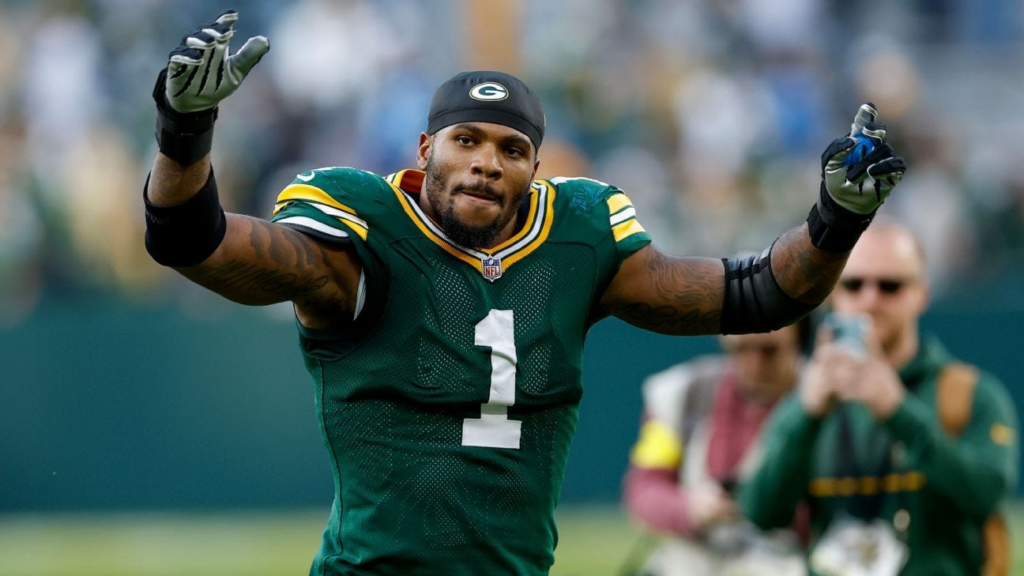
The potential return of Micah Parsons could provide an enormous boost to a defense that has been asked to compensate for an increasingly unreliable offense.
A healthy Sean Rhyan would help stabilize the interior offensive line, while Kevin Zeitler offers the experience and physicality necessary to improve Green Bay’s struggling rushing attack.
And Josh Jacobs remains one of the most important pieces of the offense.
When the Packers can establish Jacobs and force defenses to respect the running game, the entire offense becomes more dangerous.
Play-action becomes more effective. Defenses cannot attack Jordan Love as aggressively. And Green Bay can dictate the tempo rather than constantly reacting to its opponent.
But none of those improvements will happen automatically.
Parsons cannot fix the offensive line. Zeitler cannot single-handedly solve the running game. And Jacobs cannot create rushing lanes that simply aren’t there.
The Packers need more than healthy players.
They need a coaching staff capable of putting those players in positions to succeed.
The Time for Excuses Is Running Out
Perhaps the most frustrating part of this season is that the Packers aren’t lacking talent.
They have a franchise quarterback, a proven running back, an impressive collection of offensive weapons and a defense capable of making life difficult for opposing quarterbacks.
The front office has invested significant resources into building a contender.
But resources don’t win championships. Execution does.
For years, Packers fans have watched promising seasons unravel because of familiar shortcomings. Whether it was special teams, defensive communication, offensive line play or questionable situational decisions, there always seems to be one weakness that proves too significant to overcome.
And far too often, that weakness was visible long before the season ended.
LaFleur has earned the opportunity to lead this team through adversity. His regular-season success and previous playoff appearances shouldn’t be dismissed.
But neither should the repeated failures.
The Packers have seven games to demonstrate that this season can be different.
Otherwise, Green Bay may find itself in an all-too-familiar position come January: watching another championship opportunity slip away, wondering why the problems everyone saw coming were never corrected.
Because at some point, “it all starts with me” has to mean something more than words.
