
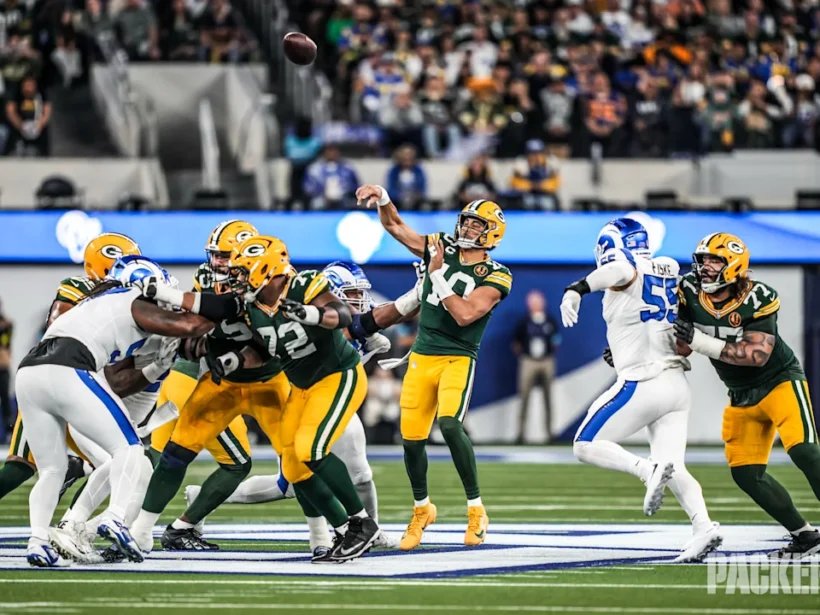
Ty’Ron Hopper gave the Packers the opening they needed. Down 20–13 in the third quarter Wednesday night, Green Bay picked off Matthew Stafford and took over in Rams territory. Two plays later, Jordan Love went deep for Matthew Golden and gave the ball right back. The Packers had a short field and a chance to tie the game. They never threatened to score again.
That was the most frustrating part of the 26–13 loss at SoFi Stadium. The Packers had already erased a 10-point deficit to get to halftime tied at 13. They came out of the locker room and managed 55 yards, two first downs, and zero points.
Coming off a bye, with a chance to beat a team they were tied with in the NFC wild-card race, Green Bay played its worst football when the game was there to be won.
The season is still alive at 6–5. But the Packers woke up on Thanksgiving ninth in the NFC, a game behind a Rams team that now owns the head-to-head tiebreaker. They’ve scored 23 points in their last two games combined. There’s a way back into the playoff picture, and it starts with an offense that can put together a drive when it needs one.
The Packers keep wasting good first downs
Each of Green Bay’s first three possessions of the second half opened with a gain of five or six yards. Those drives lasted eight plays combined. The Packers went three-and-out twice and threw an interception on the other possession.
A false start helped kill one of those drives. For all the talk about staying ahead of the chains, Green Bay actually did it three times in a row and still couldn’t move them.
That’s where Matt LaFleur can start. On second-and-4 or second-and-5, give Love a quick answer and give the defense a reason to respect the handoff. A run behind a double-team, a quick out to Golden, or a sit route for Tucker Kraft can get the next set of downs. If the defense starts driving downhill on those throws, that’s when the shot downfield has a better chance of being there.
Green Bay finished 2-for-8 on third down and ran the ball 14 times for 55 yards. The Rams’ nearly 41 minutes of possession limited the Packers’ opportunities, and Green Bay made that worse by giving away the ones it had.
Kevin Zeitler’s ankle injury added another complication up front. With Kaleb Johnson getting his first NFL start and the line shuffling again, LaFleur needs a few runs he trusts enough to call on second-and-medium. Those are the carries that can keep a drive alive and keep the defense guessing.
For Jordan Love, the Deep Ball Is All About Picking His Spots
The deep ball to Golden was an understandable call. Green Bay had just stolen a possession, and a touchdown would have changed the game. But Golden got rerouted, and Love said afterward that he made a bad read.
Once the timing changed, Love still had second down, good field position, and a one-score game. He had time to work the drive. The fourth-quarter interception on a throw toward Bo Melton took away another chance after Green Bay had finally picked up its first two first downs of the half.
Love’s willingness to attack downfield is a big part of what makes this offense dangerous. LaFleur can preserve that aggression by giving him a reliable underneath option on those calls. And Love has to take it when the coverage wins. After Hopper’s pick, even a completion for a few yards would have made Los Angeles defend another snap with the game still hanging in the balance.
The passing game needs an answer when Watson goes out
Christian Watson had four catches for 65 yards and a touchdown before leaving with a concussion. He helped pull Green Bay out of a 13–3 hole, and the passing game lost its rhythm after he went out. Watson changes how a safety plays. When he’s off the field, LaFleur has to find other ways to make that safety move.
That could mean using motion to give Golden a cleaner release, putting him in a bunch so a corner can’t get his hands on him as easily, or pairing a route that occupies the safety with a crosser underneath.
Kraft can give Love a target in the middle when the deeper route gets covered. Golden can still get his chances downfield, and Green Bay can get him involved early enough that his biggest opportunity of the half doesn’t come on a contested deep ball.
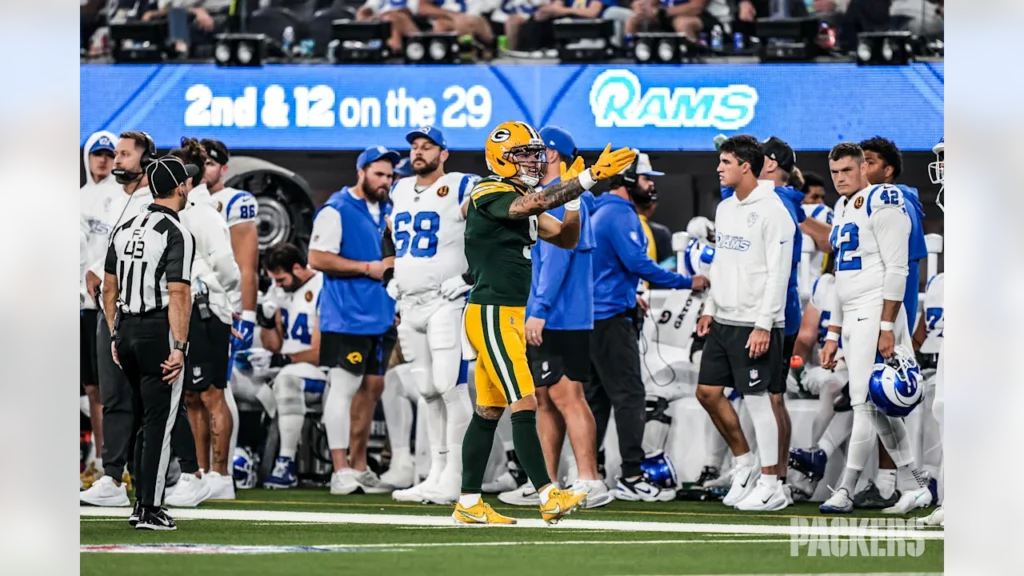
The climb starts in New Orleans
There are six games left. The Packers go to New Orleans next, then get Buffalo and Miami at Lambeau. They still have Chicago on Christmas, Houston at home and Detroit in the regular-season finale.
Those two division games give Green Bay a chance to make up ground directly, provided the Packers do enough before then to make them matter. A 4–2 finish gets them to 10–7. With the Rams already holding the head-to-head edge, even that would leave Green Bay watching other scoreboards.
New Orleans is the first chance to show something has changed. The next time the defense hands Love the ball in plus territory, Green Bay needs to turn it into points.
The next time a drive starts with six yards, it needs to pick up the other four. Those were winnable situations in Los Angeles, and the Packers kept letting them go. Do it again in December, and the games against Chicago and Detroit might only matter to Chicago and Detroit.
