
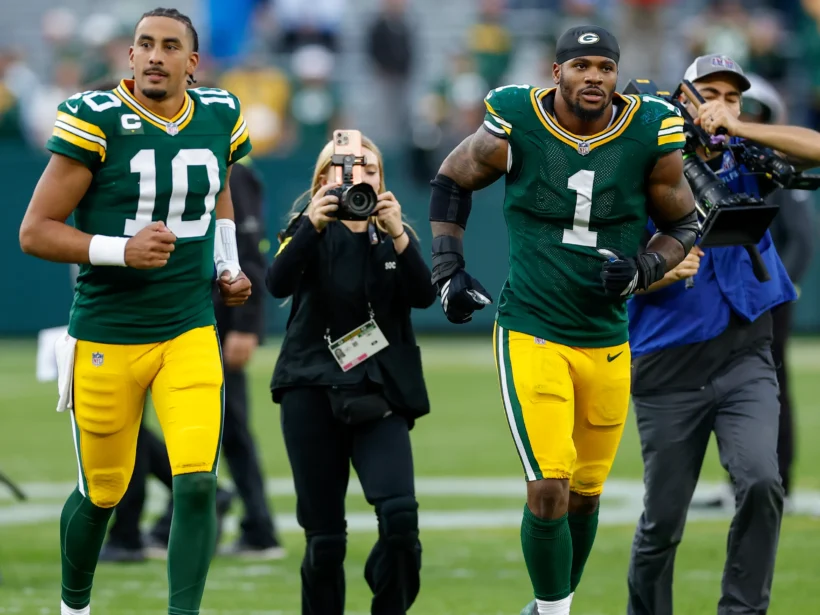
The 2025 NFL season confirms that the Green Bay Packers are no longer a rebuilding franchise but a team firmly positioned in the league’s competitive middle tier, with a path toward consistent contention.
While Americans get a break from football, the Packers’ front office and coaching staff remain focused on translating recent progress into sustained success.
The past season delivers clear lessons about what works, what still needs refinement, and how thin the margins are between playoff teams and genuine contenders. Green Bay shows resilience, depth, and schematic adaptability, but also exposes structural weaknesses that limit late-game consistency.
As the organization looks ahead to next season, the Green Bay Packers face an opportunity to evolve strategically rather than overhaul impulsively. The following lessons outline how that evolution can shape a stronger, more reliable contender.
Defensive Structure Must Be a Priority
The 2025 season reinforces that it’s not just talent accumulation that defines whether the Green Bay Packers take the next step; it’s the defensive structure.
Green Bay’s defense performs well in stretches but struggles with consistency, particularly in coverage reliability and pressure timing. When the system breaks down, opponents exploit space rather than personnel mismatches.
The most important lesson is the need to prioritize cohesion in the secondary. Coverage communication issues emerge repeatedly, especially against disciplined offenses that force defenders to react rather than dictate. This places stress on the entire unit and limits situational flexibility.
From a roster-building perspective, the Packers benefit most by investing in scheme-fit defenders who execute assignments cleanly rather than chasing high-variance playmaking.
Defensive stability creates ripple effects across betting markets, weekly projections, and opponent preparation. That stability also narrows outcomes, a key factor for analysts tracking NFL odds this weekend, as they evaluate teams built to limit volatility rather than chase splash plays.
Depth and Durability Drive Contention
The 2025 season makes one reality unavoidable: depth matters as much as top-end talent. The Green Bay Packers remain competitive even when rotations change, but performance drops when injuries test the middle of the roster. That gap highlights the difference between depth built through development and depth patched through short-term solutions.
Green Bay’s organizational model works best when young, cost-controlled contributors fill critical rotational roles. When those pipelines stall, the team becomes reactive rather than resilient. The lesson for the following season is to strengthen depth at premium positions without sacrificing financial flexibility.
Managing the salary cap efficiently allows the Packers to withstand attrition while maintaining identity. That approach also prevents younger units from being overexposed in high-leverage moments. Teams that weather injuries without drastic performance swings tend to outperform preseason expectations.
For the Green Bay Packers, sustained contention depends less on headline acquisitions and more on building a roster that absorbs adversity, a trait that defines playoff-caliber organizations year after year.
Offensive Identity Needs Strategic Refinement
The Green Bay Packers’ offense flashes efficiency in 2025 but lacks a consistently imposed identity. At times, the system adapts well to opponents; at others, it becomes reactive and predictable. The lesson moving forward is not reinvention, but refinement.
The latest NFL insights and trends show that Green Bay performs best when its offensive philosophy leans into balance and structural pressure rather than situational improvisation. When formations and tempo dictate defensive responses, the offense controls games. When that control fades, drives stall, and margins shrink.
One key takeaway is maximizing personnel groupings that stress defenses horizontally and vertically without increasing risk. The Packers demonstrate they can create favorable matchups through alignment rather than complexity. That principle should guide offseason planning.
Consistency, not creativity alone, defines elite offenses. For the Green Bay Packers, refining execution within an established framework offers the most straightforward path to sustained production. A stable offensive identity also improves predictability for internal evaluation and external market expectations heading into next season.
Situational Execution Determines Outcomes
The difference between a strong season and a breakthrough season often comes down to situational execution.
In 2025, the Green Bay Packers showed progress but still struggled in late-game management, critical downs, and momentum-shifting moments. These situations magnify structural weaknesses rather than isolated errors.
Clock management, red-zone efficiency, and end-of-half decision-making remain areas where marginal improvements could yield outsized results. The Packers lose winnable games not because of effort, but because execution tightens too late.
This lesson extends beyond coaching philosophy into preparation and accountability. Teams that master situational football reduce randomness and force opponents to play perfectly. Green Bay’s next step is to embed situational excellence into weekly planning rather than addressing it reactively.
Improved situational execution also stabilizes perception across the league. Teams that close games consistently command respect, influence betting confidence, and shift narratives. For the Green Bay Packers, mastering these moments transforms competitive performances into reliable victories.
The NFC North Requires Constant Adjustment
The 2025 season proves that the NFC North no longer allows complacency. Every divisional matchup demands adaptability, and the Green Bay Packers cannot rely on historical positioning or projected trajectories. The division evolves quickly, and success requires weekly recalibration.
Green Bay’s lesson is clear: winning the division requires prioritization, not assumption. Divisional games expose tendencies faster than non-conference matchups, making preparation and flexibility critical. The Packers perform best when they treat divisional contests as tone-setters rather than checkpoints.
Strategically, this means allocating resources with divisional matchups in mind, from defensive looks to roster depth tailored for physical, high-variance games. The teams that control their division often dictate postseason paths.
For the Green Bay Packers, mastering the NFC North remains the most direct route to January relevance. Consistent divisional success stabilizes standings, strengthens confidence, and positions the organization to build momentum that extends beyond the regular season.
Gaining Clarity and Precision in 2026
The 2025 season delivered clarity for the Green Bay Packers: progress is real, but refinement determines whether the next step leads to contention or stagnation. The lessons are structural, not superficial. Defensive cohesion, roster depth, offensive identity, situational execution, and divisional adaptability all shape the path forward.
As the organization prepares for next season, the focus must remain on sustainability rather than reaction. Teams that build methodically outperform those chasing short-term solutions. For the Green Bay Packers, applying these lessons transforms potential into consistency.
If Green Bay commits to disciplined growth and strategic continuity, the foundation already in place supports a future defined by reliable competitiveness in an increasingly demanding NFL landscape.
