
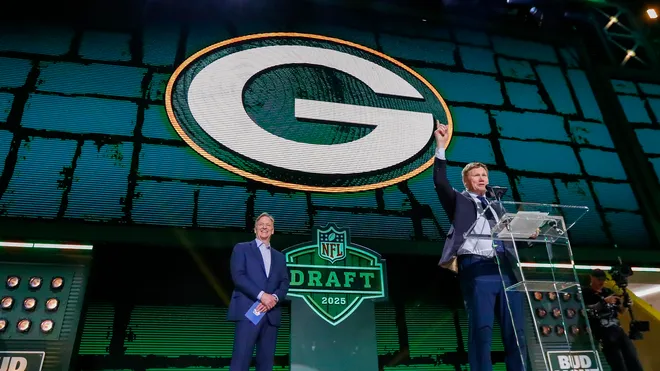
Draft week is here, and a new class of Green Bay Packers will be announced Friday and Saturday in Pittsburgh. Although their first round pick belongs to the Cowboys in return for Micah Parsons, this draft is still extremely important for Brian Gutekunst to have a near perfect Packers’ draft.
Since Aaron Rodgers left 3 seasons ago, the Packers have played every wildcard weekend, but only have one win in that time period. As the young and cheap roster leaves or gets paid, Gutekunst needs to keep the roster fresh and fill in holes to stay competitive. Here is one player at every Packers pick (and a few honorable mentions) that should help him do that.
Round 2, pick 52: Chris Johnson – cornerback, San Diego State
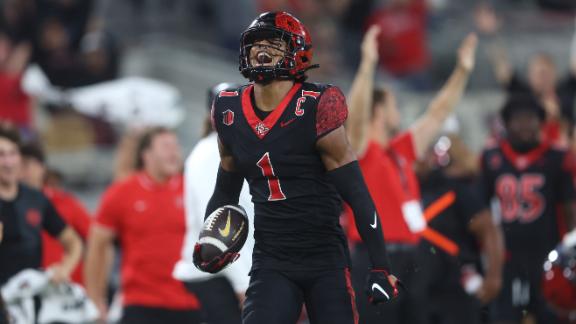
The Packers’ defense has two clear needs given their performance in the playoffs and the roster moves since then. Kesian Nixon and Carrington Valentine are, perhaps, judged too harshly as players, but cornerback is definitely an area of improvement. Chris Johnson is definitely a player that can help.
Johnson impresses in all the areas where a cornerback should. He is a good athlete, has good statistics in coverage and a lot of interceptions. Additionally, the Packers have already shown interest in him by having a virtual meeting during the offseason.
The only concern for Johnson as the Packers first draft pick in 2026 is if he will be available. Although he played in a mid-power conference and wasn’t an exceptional corner until his final year, Johnson still sits at #38 on the consensus draft board. This doesn’t necessarily mean that he is out of reach of the Packers at pick 52, but it does mean the board will have to be very favorable to have the ideal start for a perfect Packers’ draft.
Christen Miller – defensive tackle, Georgia: Miller would fill the other major hole on defense at run-stopping defensive tackle. The Packers love players from Georgia and invited Miller as a top 30, but may not love taking a non-skill position with their top draft pick.
Gennings Dunker – offensive line, Iowa: The Packers add to their offensive line room every draft, and often do it before expected. Dunker perfectly fits the traditional Packers offensive lineman including versatility, but the offensive line is not the most pressing need for the team.
Chris Brazzell – wide receiver, Tennessee: Wide receiver is a sneaky need for the Packers after the trade of Dontayvion Wicks, especially receivers who can block in the run game. Brazzell is big, strong and fast, but played in an offensive scheme which often does not create professional-ready wide receivers.
Round 3, pick 84 – Dominique Orange – defensive tackle, Iowa State
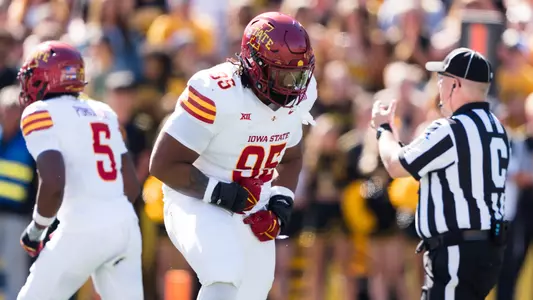
Like Christen Miller at pick 52, Orange fills the need of a gap-filling run defender. Spending a day 2 pick on Orange would protect from the risks of playing Javon Hargrave, who struggled at the position last year in Minnesota, or from Jonathan Ford or Nazir Stackhouse who were 7th round picks and UDFA’s respectively.
Orange fits the profile of what the Packers like in defensive lineman, as he is a top athlete at the position. He has experience and good tape at a position of need and has gotten the attention and interest of Packers fans.
Despite his athleticism, Orange hasn’t shown the ability to affect the game as a pass rusher. This puts him in the same position as Miller as having questionable value as a top 100 pick. Still, his ability to strengthen the defense right away would make him a great choice 2nd player taken in a perfect Packers’ draft.
Malik Muhammed – cornerback, Texas: In the likely event that Chris Johnson is gone before pick 52, Muhammed would be a great option to help the outside corner room. Although he is lighter than what the Packers consider for corners, they appear to like him enough to invite him as a top 30 visit.
Ted Hurst – wide receiver, Georgia State: Hurst is a likely option to replace Wicks, as he closely fits what Matt Lafleur likes in wide receivers and was a top 30 visit. He does come from a small school and wasn’t asked to demonstrate a full route tree or help with run blocking.
Dani Dennis-Sutton – defensive end, Penn State: Defensive end is another sneaky need for the Packers who will be missing former Nittany Lion Micah Parsons for at least the first month of football. Dennis-Sutton is a freak athlete with plenty of experience and production at the position who would provide another option if Lukas Van Ness and Barryn Sorrell don’t scare opposing quarterbacks.
Round 4, pick 120: De’Zhaun Stribling – wide receiver, Ole Miss
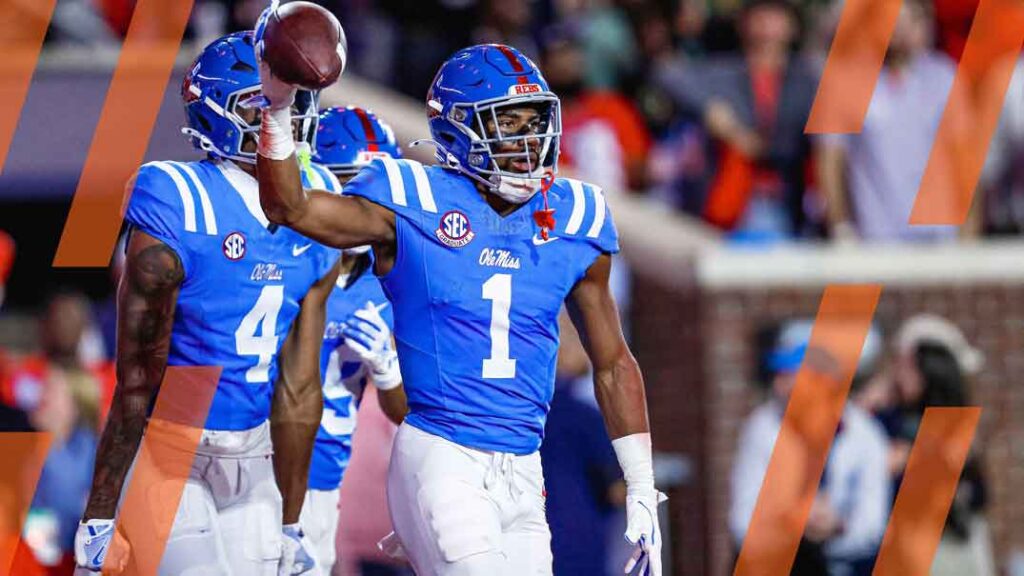
Romeo Doubs and Dontayvion Wicks were 1st and 3rd in total targets for the Packers offense last season, accounting for over 25% of all passing attempts. While fans can get excited about an increased role for Christian Watson and Matthew Golden, Stribling would be an excellent fit for the team.
Stribling is the quintessential Matt Lafleur wide receiver: tall, fast, and strong. His speed makes him a serious deep threat and his size allows him to get up and make contested catches. However, possibly his most attractive feature to the Packers is his effort in the run game. He is an eager blocker who has reps on tape of pushing cornerbacks 10 yards downfield or straight to the ground.
Despite his athletic ability, Stribling tends to be a linear athlete and may have trouble winning on complicated routes. He also has not been more than a wide receiver two which indicates his limitations as a total offensive player. Nevertheless, his athletic upside and run blocking will have him in consideration in day 3 of the perfect Packers’ draft.
Austin Barber – offensive tackle, Florida: Barber fits the type of offensive lineman the Packers add every draft: he is a good athlete and has versatility for either tackle position. He is a bit taller than a typical Packers tackle, but this may work in his favor as he moves very well for a man of his size.
Chris McClellan – defensive tackle, Mizzou: McClellan has been compared to Mike Daniels, which would immediately catch the attention of the Packers. Although he needs development at the position and has lower agility scores than the Packers like, his production in the run and the pass game makes him an enticing player.
Kaleb Proctor – defensive line, Southeastern Louisiana: Unlike McClellan, Proctor’s strength is only as a pass rusher, but he excels as a rusher with elite speed and violence up the middle. He is smaller than most defensive linemen, but the Packers have signalled that this doesn’t matter to them by meeting with him at the Shrine bowl and at a top 30 visit.
Sam Roush – tight end, Stanford: Roush is exactly what the Packers need most in a tight end: a top athlete who is an excellent blocker and is impressive as a pass catcher at his size. As enticing as he may be, the tight end room may be too full as is for the Packers to take a tight end this high.
Round 5, pick 153 (from Philadelphia): Charles Demmings – cornerback, Steven F. Austin
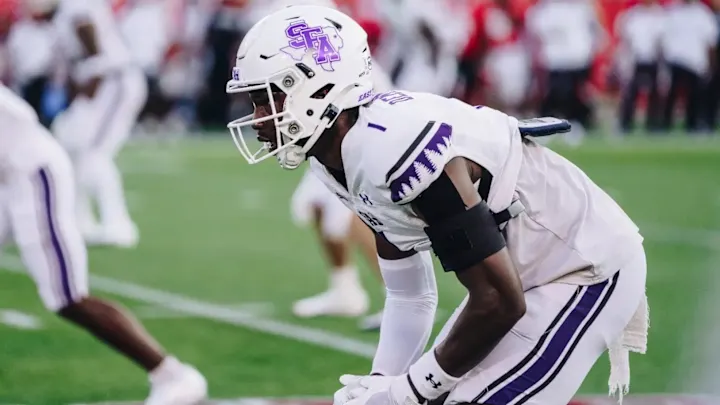
FCS origins don’t matter to the Packers when a player meets their athletic thresholds like Demmings. It also won’t matter if he would be the second cornerback in their class, as they have been willing to take multiple players at positions of need such as Luke Musgrave and Tucker Kraft or Javon Bullard and Evan Williams.
On tape, Demmings has shown himself to be an agile and aggressive outside cornerback. As a 90th percentile athlete, his skills should be able to transfer to the NFL despite only playing at the FCS level in college.
There will no doubt be a steep learning curve for Demmings as a professional, and he may play most of his snaps on special teams as a rookie. However, the Packers need for good outside corner play is strong enough to overlook these downsides for a player like Demmings to be a candidate in the perfect Packers’ draft.
Jeff Caldwell – wide receiver, Cincinnati: Caldwell is another prototypical Packers receiver with height, weight and speed to fill in for the Packers. However, he has a lot of development in his footwork and game strength that may limit his time on the field as a rookie.
Demond Claiborne – running back, Wake Forest: Claiborne met with the Packers at the Shrine Bowl where he showcased his explosive speed and cuts in the open field as well as good hands for a running back. His path to Packer-hood is likely dependent on the health of former 3rd round pick Marshawn Lloyd who is the Packers current change-of-pace player behind Josh Jacobs.
Taylen Green – quarterback, Arkansas: Green would be a great replacement for Malik Willis as an athletic backup quarterback who could grow a lot in Lafleur’s system. He fits the Packers metrics, but might not fit the value of a 5th round pick as a player who will never be the starter as long as Jordan Love is on the team.
Round 5, pick 160: Nadame Tucker – defensive end, Western Michigan
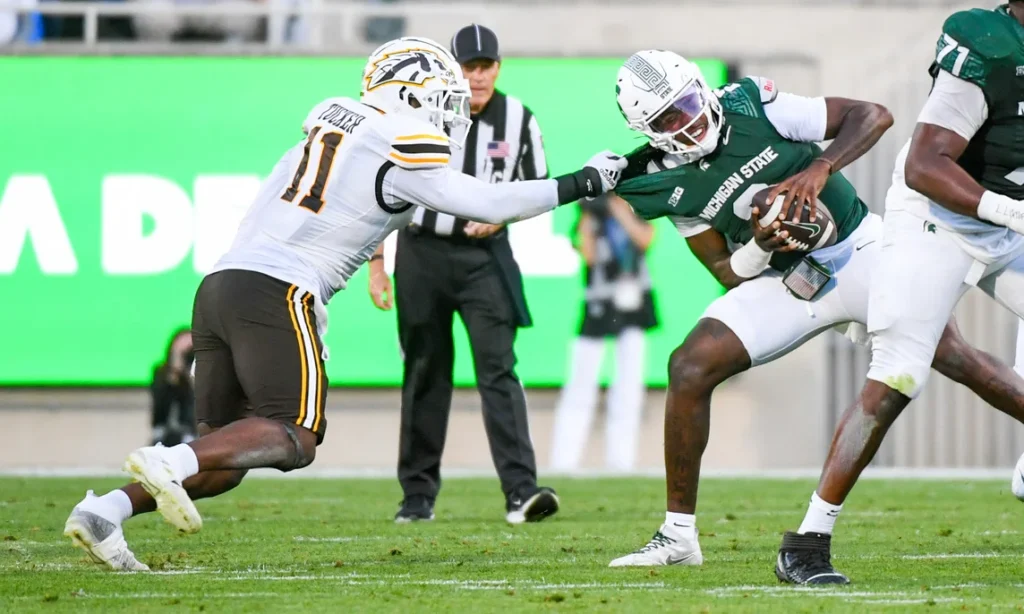
If Dani Dennis-Sutton is a possible replacement for Rashan Gary, Tucker can be the replacement for Kingsley Enagbare. As the draft gets into later rounds, Tucker is exactly the kind of football player Green Bay will take a look at.
Tucker was extremely productive in his final season at Western Michigan; ending the season with 14.5 sacks and 21 tackles for loss. He plays with good get-off, lateral quickness, and more strength than is usually expected for a player of his size.
Tucker weighs much less than a typical defensive end and was not outstanding in any athletic testing besides the broad jump. Before his senior season he only played in 13 total games and got 1.5 sacks total. While not a perfect prospect, his final year is good enough to take a flyer in the perfect Packers’ draft.
TJ Hall – cornerback, Iowa: Hall was a top 30 visit for the Packers and fits their mold of an outside cornerback who shows he understands zone defense well. However, he is a limited athlete and had low ball production throughout college.
Will Kacmarek – tight end, Ohio: Kacmarek is a big former Lacrosse player who shows his strength as a strong blocker and good linear athlete, all of which led the Packers to meet with him at the Senior Bowl. His projected role is already filled by Tucker Kraft which hurts his value as a prospect for the Packers.
Kaelon Black – running back, Indiana: Black fits the Packers mold at running back and was a top 30 visit who runs strong and with good balance. His strengths are similar to what the Packers have in Josh Jacobs which will either make him less likely to be drafted to Green Bay, or more so as the heir apparent to Jacobs.
Round 6, pick 201: Landon Robinson – defensive tackle, Navy
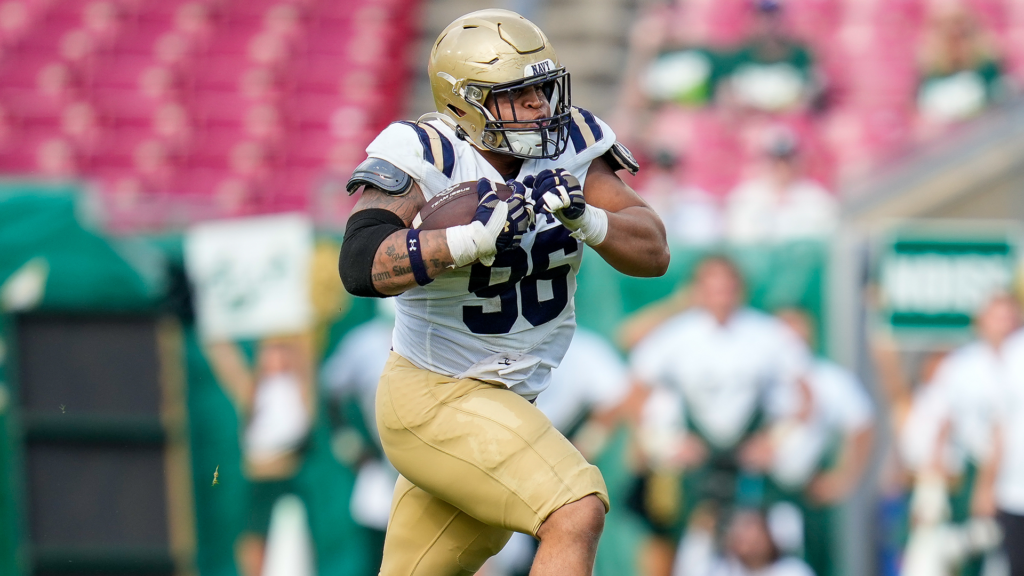
Robinson drew the Packers interest with his strong performance at the Shrine Bowl leading them to meet with him there and at his Pro Day.
Robinson is shorter than many players at his position, but this allows him to play with excellent leverage against larger offensive linemen. He is very strong and explosive for his size, and even ran for a first down conversion on a fake punt while at Navy.
While he uses it well, his size may limit him as a professional if he cannot compete pound-for-pound with professional players. While he goes against the philosophy of “fast gets slow but big doesn’t get small,” his upside clearly has the Packers interested as a possible late-round lottery ticket.
Mason Reiger – defensive end, Wisconsin. As a local kid, Reiger was an easy visit for the Packers and has the tools to be a decent rotational edge player like Enagbare was before. He is light and has short arms given his height as well as limited explosiveness.
Thaddeus Dixon – cornerback, North Carolina: Dixon is another option for the Packers to, hopefully, double up at cornerback with an athletic player who is very comfortable in zone coverage. He is unlikely to be on the field outside of obvious passing situations given his weaknesses in the run game and man coverage.
Bishop Fitzgerald – safety, USC: Fitzgerald is an excellent “read and react” safety that got him to 5 interceptions in 2025, which could be very helpful for the Packers who struggled to get turnovers last season. However, he is a limited athlete and would have a steep uphill battle to displace the safety trio of Xavier McKinney, Evan Williams, and Javon Bullard.
7th round, picks 236, 255:
Jordan van den Berg – defensive tackle, Georgia Tech: Relative Athletic Score (RAS) assigns players a percentile rating based on athletic testing results for their height, weight, and position. Van den Berg scored a 10, meaning he is the 100% percentile athlete for his position. With that kind of special talent, it would be wise for the Packers to take him and figure out his downsides later.
John Michael Gyllenborg – tight end, Wyoming: Gyllenborg is an athletic freak that, while raw, could develop into an excellent all-round tight end. He needs to figure out his drops and run blocking, but could eventually develop into an excellent compliment to his fellow great-plains tight end, Tucker Kraft.
Andre Fuller – cornerback, Toledo: Fuller would be a “traits” pick that could start on special teams and possibly develop into a starter. As a one year starter, he has a lot of development to do so he will hopefully not be the only cornerback taken by the Packers.
Deven Eastern – defensive tackle, Minnesota: Eastern was a productive upper midwest power 10 player that meets the Packers thresholds for build and athleticism. As a taller prospect, he has a lot of work to do on improving his pad level and lacks pass rush, but could develop and continue to be productive as a pro.
